CV vs. Resume: Key Differences and When to Use Each

Amanda Menin is a SHRM-SCP-certified recruitment and organizational design expert with more than 20 years of experience. She has led talent strategy, retention, and HR transformation at organizations including MercyOne, Hearthside Food Solutions, and the State of South Dakota.
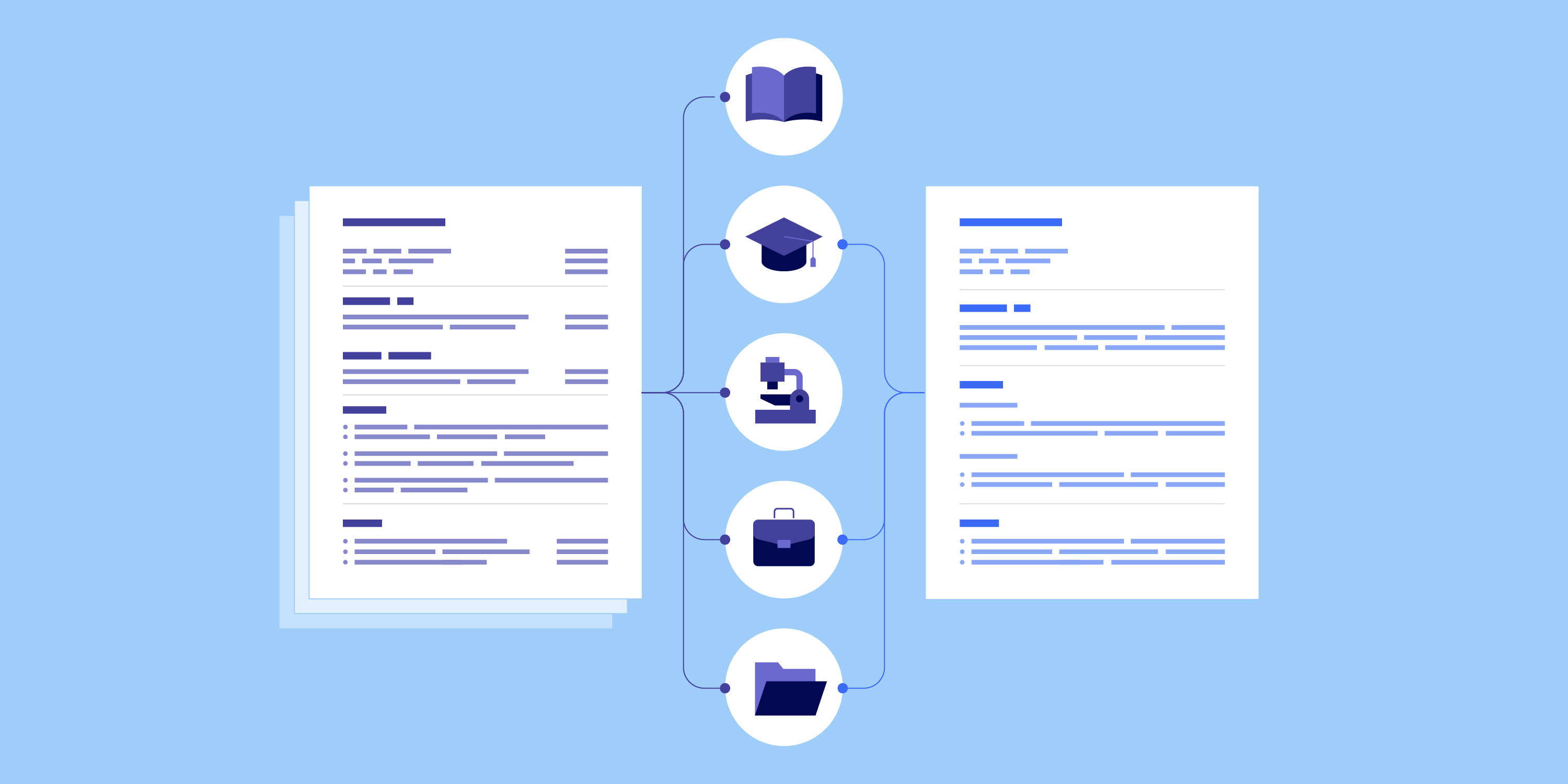
Many job seekers use CV and resume interchangeably, but they are different documents with different purposes, lengths, and regional conventions.
With both "resume" and "CV" used to refer to career documents, many job seekers are confused about whether they are different or refer to the same thing. While a resume is a concise, targeted document that works best when tailored to each application, a CV is a comprehensive record of professional and academic history. In the US, the word "CV" is mostly used in academia, research, and medicine, while in most of the rest of the world, the term is equivalent to "resume."
What Is a Resume?
The term comes from the French word "résumé," which means "summary," and it makes it clear that it's supposed to be a concise document that summarizes your professional background. It's used for most professional jobs in the US and Canada, and its purpose is to briefly and effectively showcase a candidate's work experience, skills, and competencies. Resumes work best when they are targeted and tailored for the job you're applying for.
Resumes are typically one to two pages long, depending on the length of your experience and your career level. Junior professionals, students, and recent graduates are usually expected to submit a one-page resume in their application. On the other hand, more seasoned professionals with longer track records can have a longer one, but it rarely should exceed two pages.
When it comes to what should be included in a resume, the standard resume sections are professional summary, work experience, skills, education, and certifications. That said, some jobs require additional information, and it's necessary to include licenses, languages, publications, or any other requirements or details that will clearly strengthen the application. If you're building or updating your resume, our AI resume builder walks you through each section with specific suggestions tailored to your role.
What Is a CV?
CV is an acronym of the Latin term "curriculum vitae," which literally translates as "course of life." As the name suggests, a CV is a comprehensive career document that includes all the details of someone's professional background, and it's updated periodically. In the US, CVs are mostly used for academic, research, and scientific positions and are often longer than two pages, with no upper limit. In most other countries, the term CV refers to what's called a resume in the US.
Since a CV tells the complete story of a career, it contains more sections than a standard resume. CVs generally include everything listed in a resume, plus publications, research, teaching experience, grants, conferences, presentations, awards, and so on. Some of those additional sections can be found in resumes as well, but not all and not always. Our resume builder also supports adding sections that are not standard or required for all general resumes, so you can use it to create or improve your academic CV as well.
CV vs. Resume: Key Differences at a Glance
The key differences between a resume and a CV come down to the aspects described in the table below.
Dimension |
Resume |
CV |
Length |
Typically one to two pages |
Two or more pages |
Purpose |
Concise and targeted summary of the most relevant qualifications for one specific job |
Comprehensive record of an entire academic/professional history |
Content sections |
Work experience, skills, education, summary |
Adds publications, research, teaching experience, grants, conferences, and academic credentials |
Regional usage |
Standard term in the US and Canada for most professional jobs |
In most of the world, the term is used for general job applications, while in the US, it’s mainly used for academia and research |
Tailoring per application |
Tailored to each job application |
Largely static and updated periodically |
Knowing these differences is essential, as we've seen one common mistake in our work with applicants: submitting a full CV for an industry role, or a one-page resume for an academic position that expects comprehensive detail.
Regional Differences in the Meaning of CV vs. Resume
Today, in a globalized world where companies and job seekers often work internationally, understanding the differences between the terms "resume" and "CV" is crucial. Here are the most significant ones per region worldwide:
- US and Canada: "Resume" is the term used for most industry jobs, while "CV" is reserved for academic, research, medical, and some scientific positions.
- UK and most of Europe: In the UK and most European countries, "CV" is used for almost all job applications. However, in some multinational companies and international recruiting settings, "resume" is occasionally used.
- Australia, South Africa, and India: Both terms are used almost interchangeably. While "CV" is slightly more common, "resume" is understood and widely used, particularly by multinational employers.
- Middle East: Similar to Europe, the term "CV" is standard and widely used for all job applications.
- Asia: Although "CV" is common in many Asian countries, some (e.g., Japan, China, South Korea) have their own resume conventions or use "resume" in international settings.
Using the correct and standard term for a specific region will help ensure your application aligns with local hiring practices and employer expectations.
Which Should You Use?
The answer to whether you should use a CV or a resume can be broken down into three practical questions:
1. What type of role are you applying for?
If you're applying for an industry job, prepare a concise, tailored document that is typically called a resume in the US. On the other hand, if you're targeting an academic, scientific, or research role, it's expected to submit a full academic CV.
2. Where is the employer based?
If you're applying for an industry role in the US, send a resume. In the UK and most of Europe, you should submit a CV that is similar in length and content to what's called a resume in the US. Academic CVs are expected to be comprehensive regardless of location.
3. What does the job posting say?
You should always submit what's requested in the job posting, which usually specifies either a CV or a resume. If it's unclear, stick to our recommendations for the position type, and keep in mind geographical differences in terminology.
If you're unsure, a good strategy is to contact the recruiter directly with a brief message about the preferred document type, as it takes 30 seconds and eliminates any risk.
FAQ
1. Is a CV the same as a resume?
In the US and Canada, a resume is a concise document that summarizes someone's professional background and qualifications. It includes the strongest achievements and skills and is typically tailored to each job application. A CV is a longer, more comprehensive record of academic and professional history used for academic and scientific positions. In most of the rest of the world, the term CV is used for what's called a resume in the US.
2. Can I use my resume instead of a CV?
If you're applying for a position in research, medicine, or academia, you most often need to submit a full academic CV. For industry jobs, you can use a resume and adapt it to the specific application. To be sure, always read carefully what's required in the job posting and where the employer is located, as in regions like the UK and Europe, a CV is generally how a resume is called.
3. How long should a CV be?
While a resume is generally expected to be one to two pages long, a CV is often longer than two pages and has no upper limit. In countries where the term CV is used for all applications, they are similar in length and structure to American resumes.
4. Do I need both a CV and a resume?
If you're applying for both industry and academic roles, having both types of documents is a good strategy. You should adapt your resume for each application, while full CVs are more static and are updated periodically. If you're applying only for industry professions, a resume is enough.
5. Is a CV or a resume better for international job applications?
For industry roles at companies that operate internationally, you generally need a resume. That said, remember that in some regions, resumes are called CVs, but there's no essential difference between the two. Academic CVs are the same thing regardless of the region.
6. What is the difference between a CV and a cover letter?
CV is a complete academic and professional biography, while a cover letter is a short document that is sometimes sent with a resume or a CV. Cover letters are introductory letters that recruiters and hiring managers read before analyzing your resume, and they include a short description of your professional identity, strongest achievements, and most relevant skills.
Whether you need a resume or a CV, the principles of structure and content are largely the same. They are both clear, well-organized documents that are tailored to the role you're targeting. That said, the content and amount of detail vary depending on whether you're applying for an industry role or an academic position. Whatever the hiring situation, Toptal's AI resume builder guides you through each section with AI-assisted suggestions developed by experienced hiring professionals.

Amanda Menin is a SHRM-SCP-certified recruitment and organizational design expert with more than 20 years of experience. She has led talent strategy, retention, and HR transformation at organizations including MercyOne, Hearthside Food Solutions, and the State of South Dakota.