The Most Common ATS Used by Top Companies and Tech Recruiters

Amanda Menin is a SHRM-SCP-certified recruitment and organizational design expert with more than 20 years of experience. She has led talent strategy, retention, and HR transformation at organizations including MercyOne, Hearthside Food Solutions, and the State of South Dakota.
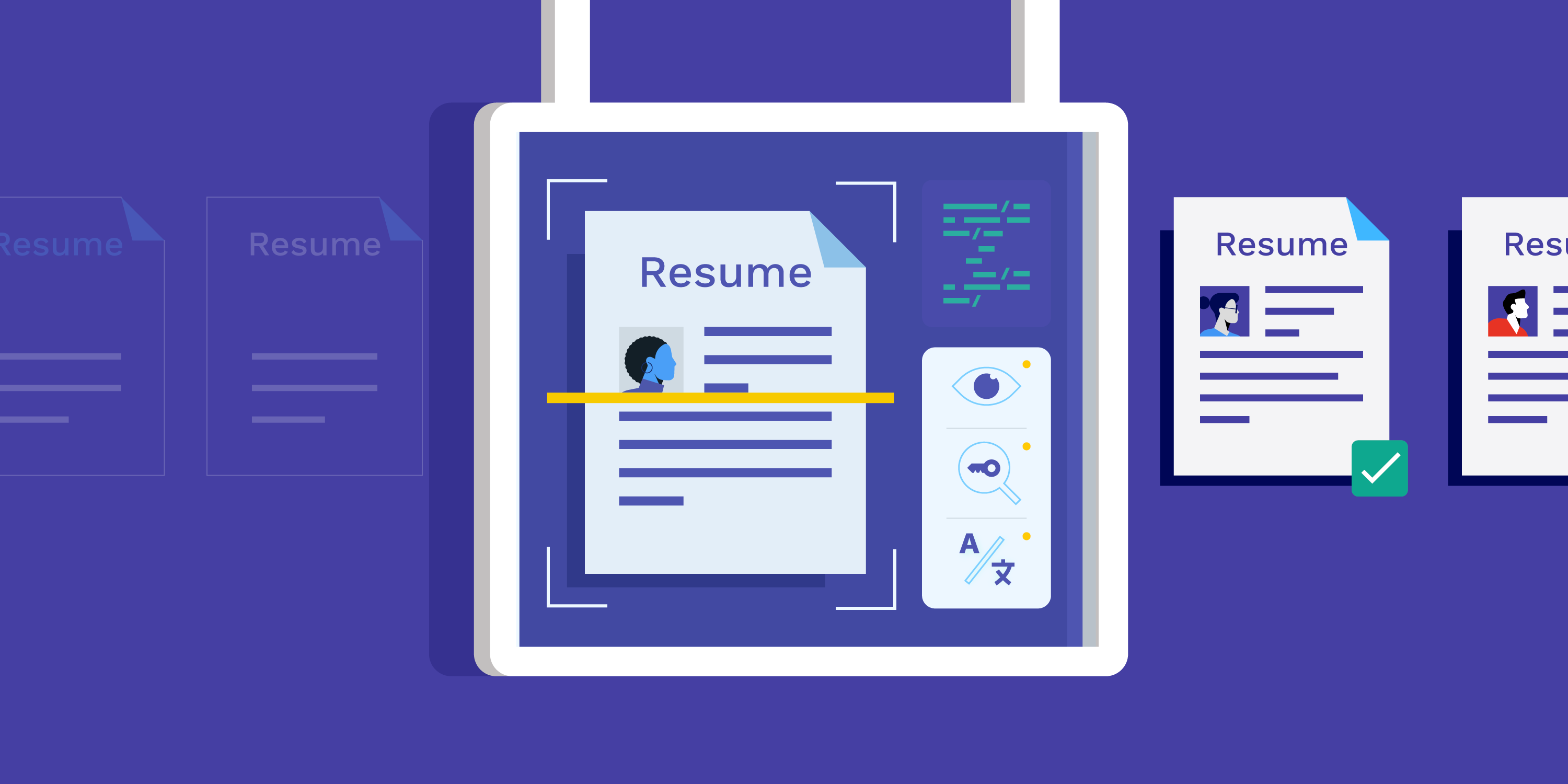
Learn how recruiters can use various applicant tracking systems to identify top tech talent.
In tech hiring, where competition for specialized skills is fierce, applicant tracking systems (ATS) play a central role in how recruiters evaluate candidates. Specialized roles attract hundreds, sometimes thousands, of applicants, making efficient talent management critical.
Applicant tracking systems have become nearly ubiquitous—around 73% of organizations report using an ATS as a core recruiting tool. However, ATS solutions vary in functionality and configuration, and misunderstanding the functionalities of your ATS can lead to overlooking qualified candidates.
This guide explores ATS functionalities, highlights key systems, and provides effective methods to strengthen tech hiring.
What Is an Applicant Tracking System?
An applicant tracking system simplifies recruitment by turning candidate data into insights that guide better hiring choices. Along with basic database management, these systems also integrate with job boards and HR software to create a seamless hiring ecosystem. By automating resume screening and applicant ranking, ATS solutions serve as the backbone of modern enterprise recruiting; they not only reduce manual workload for recruiters but also improve candidate experience through faster communication and transparent feedback.

The Most Common ATS Used by Top Companies
Different industries tend to favor different ATS solutions. For example, finance and enterprise organizations often rely on Workday or SAP SuccessFactors, while startups and midsize tech companies prefer more agile systems like Greenhouse or Lever.
Below are some of the most common ATS solutions used by top companies today:
iCIMS
iCIMS is a pure-play ATS vendor, widely used across midmarket and enterprise organizations. iCIMS can struggle with parsing resumes that include images, graphics, or nonstandard characters, which can result in missing applicant information. For tech resumes, symbols used in programming (e.g., <>, {}, #) or unusual fonts can cause parsing errors in iCIMS, leading to the ATS potentially filtering out quality applicants. The system works best with Word documents or PDF files, and acronyms need to be both spelled out and abbreviated (e.g., Structured Query Language (SQL)). Market research indicates that iCIMS leads the ATS space with a market share of approximately 10.7%.
Oracle Taleo
Oracle offers a recruiting and ATS module as part of its broader Oracle Cloud HCM suite. It’s widely adopted by large enterprises and integrates tightly with Oracle’s HCM platform, so recruiters can manage candidates alongside payroll, performance, and workforce data. With AI-driven automation and embedded customer relationship management (CRM) tools, Oracle Recruiting is designed to support organizations with complex and high-volume hiring needs.
For tech recruiters, Oracle’s enterprise-wide integration can surface applicant profiles across multiple roles (e.g., cloud, engineering, or data science) based on keywords. This makes precise alignment with job postings, especially technical skills and certifications, critical for visibility across departments.
As with other enterprise systems, Oracle performs best when resumes are formatted as clean Word or PDF files, free of graphics or fonts that could disrupt parsing. This ATS also requires acronyms to be paired with full terms to ensure parsing accuracy and to reduce the risk of filtering out quality applicants.
Workday
Workday’s recruiting product, Workday Recruiting, is integrated within the Workday HCM platform. It expects traditional headings like “Experience,” “Education,” “Skills,” and “Certifications,” or the candidate’s resume may not parse correctly. Workday may miss or misclassify information if unconventional section labels are used, requiring the recruiter to bypass filters to screen for qualified candidates.
Nontraditional headings and complex formatting (columns, tables, graphics, images) may not be parsed in Workday. Like iCIMS and Oracle, Workday favors straightforward, text-based resumes in standard Word or PDF formats. Tech candidates who are not mindful of acronyms may also have their skills or experience missed by the ATS, which recruiters need to be cognizant of.
Greenhouse
Greenhouse is a dedicated ATS (with some CRM functionality) focused on candidate experience and structured interviewing. However, its resume parsing can be error-prone. As with other systems, resumes may fail to parse correctly if they include spaces between letters or photos, or when resumes are uploaded as images instead of documents.
For tech resumes, additional risks include code snippets or portfolio visuals embedded in graphics or tables. Embedding links in plain text is more reliable. Greenhouse also warns that overly large resume files or fake/anonymized data can cause the system to fail to parse a resume altogether, which can create issues if qualified applicants use anonymized resumes to reduce bias, as their submissions might be rejected before review.
Other common problems with Greenhouse parsing include:
- Contact information placed in a header, footer, or text box.
- Columned layouts or inconsistent section formatting.
- Company names missing identifiers such as Inc., Co., LTD, or LLC.
- Incomplete job titles (e.g., “Account Exec” instead of “Account Executive”).
As with all ATS systems, recruiters using this platform should be aware of its limitations and be prepared to bypass filters as needed to ensure quality applicants are not missed.
UKG
UKG provides UKG Pro Recruiting, an ATS embedded within its broader HCM suite. The platform emphasizes a candidate-centric, relationship-driven design that integrates with tools like LinkedIn to streamline sourcing and hiring. By combining recruiting with HR and payroll functions, UKG Pro Recruiting helps candidate information flow seamlessly into employee records after hire, while delivering a simplified, mobile-friendly experience for applicants.
For tech recruiters, UKG’s strong LinkedIn integration means skills commonly listed on LinkedIn profiles (e.g., Python, Kubernetes, AWS) may help improve candidate visibility. As with other ATS solutions, UKG prefers clean, text-based resumes, and parsing errors are expected.
SAP
SAP offers SuccessFactors Recruiting, an ATS within its larger talent acquisition suite. The system parses common resume fields (such as personal details and work history) and supports multiple languages, including English, German, French, Spanish, Portuguese, and Chinese.
However, SAP has several limitations. Picklists—fields that have predefined values—may not process correctly. Resumes submitted via API or by agencies are not read accurately, and data extraction often fails when Mobile Apply—SAP’s feature that lets candidates submit applications directly from mobile devices to job boards—is enabled or when scanned or image-based PDFs are uploaded.
Tech recruiters should be cognizant that multilingual resumes and structured data like detailed skills matrices or project tables often fail to scan correctly. To improve reliability, recruiters should encourage candidates to stick to a simple single-column format and present technical skills in bullet points under a clear “Skills” section.
Lever
Lever is an AI-powered recruitment platform that combines sourcing, tracking, and relationship management in one system. It’s used by major organizations such as Netflix, Shopify, DiDi Global, Aptiv, and Fanatics. Like other ATS solutions, it places strong emphasis on keywords. Its search recognizes word variations, but not acronyms, so recruiters should be aware that if acronyms are not spelled out, they will likely not be detected in search results.
Because Lever emphasizes keyword filters, tech recruiters should be aware that the ATS is looking for specific terms from job postings (“JavaScript” vs. “JS,” “Machine Learning Engineer” vs. “ML Engineer”), and if they are not present, applicants may be filtered out. This ATS also allows recruiters to apply filters, which gives recruiters more manual control to see items that match specific criteria, such as job titles or degree names.
As with the other ATS systems, Lever often struggles to interpret resumes that include tables and graphics. It supports a limited range of file types—Word (.doc or .docx), PDF (.pdf), Rich Text Format (.rtf), WordPerfect (.wpd), HTML (.html), and OpenDocument Format (.odf)—but it cannot read text embedded in image files such as .jpg or .png.
Why Does It Matter Which ATS a Company Uses?
Applicant tracking systems scan resumes differently based on their design and configuration, which can significantly impact the hiring process. For tech recruiters, this means the choice of ATS can directly influence whether resumes full of technical skills, certifications, or nontraditional formatting are read accurately. Poorly parsed resumes may require manual intervention, leading some applicants to abandon the process.
Additionally, many ATS solutions use keyword-based ranking systems, which can inadvertently filter out qualified candidates if their resumes lack specific terms aligned with the job description. Misconfigured filters or a lack of awareness about ATS limitations can result in missed opportunities to identify top tech talent.
To mitigate these risks, organizations should:
- Educate hiring managers on ATS functionality and limitations.
- Regularly review and adjust keyword filters to align with evolving job roles.
- Encourage applicants to use ATS-compatible resume formats.
Common ATS Misconceptions Recruiters Should Address
Recruiters and hiring managers should be aware of the following misconceptions, as misunderstanding how ATS platforms function can lead to missed candidates or bias in the hiring process:
Misconception #1: ATS Handles Everything Automatically
While ATS streamlines processes, it requires oversight to address data-processing issues and provide a robust candidate pool. ATS solutions are good at what they are designed to do: analyze clean data with prescriptive headings, etc. In reality, not all resumes are in this ideal format, so recruiter oversight is required.
Misconception #2: Creative Resumes Are Beneficial
Complex designs often hinder parsing, making simple, text-based resumes more effective. The temptation for job seekers is to add more and to increase the creativity or the complexity of their resumes to look sophisticated and to stand out; however, when it comes to passing through an ATS, less is more.
Misconception #3: Passing ATS Filters Guarantees Quality
A high ATS score indicates keyword alignment, not necessarily candidate suitability. Many ATS solutions score candidates based on the number of keyword matches between the job description and their resume. Just because the resume has a high keyword match does not mean that the candidate is suitable for the job, as it does not gauge the context, relevance, or depth of the candidate’s skills.

How Tech Recruiters Can Optimize Hiring With ATS
To maximize the effectiveness of ATS solutions in tech recruiting, recruiters can:
- Leverage Boolean searches: Apply advanced search techniques to surface candidates with niche technical skills or certifications (e.g., Kubernetes AND Rust NOT “junior”).
- Utilize AI-driven scoring: Incorporate AI features within ATS to rank resumes efficiently while maintaining human oversight to avoid bias.
- Promote internal mobility: Use ATS data to identify strong internal candidates and streamline their progression into open roles (e.g., reskilling tech employees into emerging AI or cloud roles).
- Refine job postings: Make sure descriptions are clear and keyword-rich so ATS solutions attract and match the right candidates.
- Audit ATS parsing accuracy: Periodically test how your ATS processes resumes to identify formatting or keyword issues that may block qualified candidates.
How ATS Resume Checkers Support Tech Recruiters Who Already Use ATS
While applicant tracking systems filter and rank candidates, they aren’t perfect. Misconfigured filters and inconsistent formatting can cause strong applicants to be excluded before a recruiter ever sees them. Free ATS resume checkers, like Toptal Resume’s, give recruiters a way to test how resumes are being read and catch issues early. This way, resume checkers don’t replace an ATS solution—they supplement it so your system surfaces the best candidates rather than filtering them out by mistake.
Recruiters can also recommend reliable resume checkers in broader resources such as company career pages, candidate workshops, or university outreach programs so applicants can improve their resumes before applying. This proactive step reduces processing issues at the source and strengthens the overall applicant pool.
Practical ATS Reminders for Recruiters in Tech Hiring
To improve ATS performance in tech hiring:
- Regularly audit parsing accuracy: Test ATS functionality with sample resumes to identify and resolve any issues.
- Update keyword filters: Adjust filters to reflect evolving job titles and technical skills.
- Promote ATS compatibility: Share resources such as Toptal Resume’s ATS resume score checker through recruitment training programs or educational partnerships to help applicants submit cleaner resumes.
- Bypass filters when necessary: Manually review candidates filtered out by the ATS so no qualified applicants are overlooked.
The Future of ATS in Tech Recruiting
Applicant tracking systems will continue to evolve with AI-driven matching and deeper integration into HR ecosystems, but their core limitation—uneven parsing accuracy—will remain a challenge. Recruiters who actively test their ATS solutions and supplement them with tools like resume checkers can minimize those gaps.
Looking ahead, the most effective recruiters will be those who treat ATS not as a replacement for judgment, but as a tool to be optimized. By balancing automation with human oversight and leveraging supportive tools, they’ll be able to hire top tech talent more effectively.

Amanda Menin is a SHRM-SCP-certified recruitment and organizational design expert with more than 20 years of experience. She has led talent strategy, retention, and HR transformation at organizations including MercyOne, Hearthside Food Solutions, and the State of South Dakota.