The Best Resume Builders for 2026

Amanda Menin is a SHRM-SCP-certified recruitment and organizational design expert with more than 20 years of experience. She has led talent strategy, retention, and HR transformation at organizations including MercyOne, Hearthside Food Solutions, and the State of South Dakota.
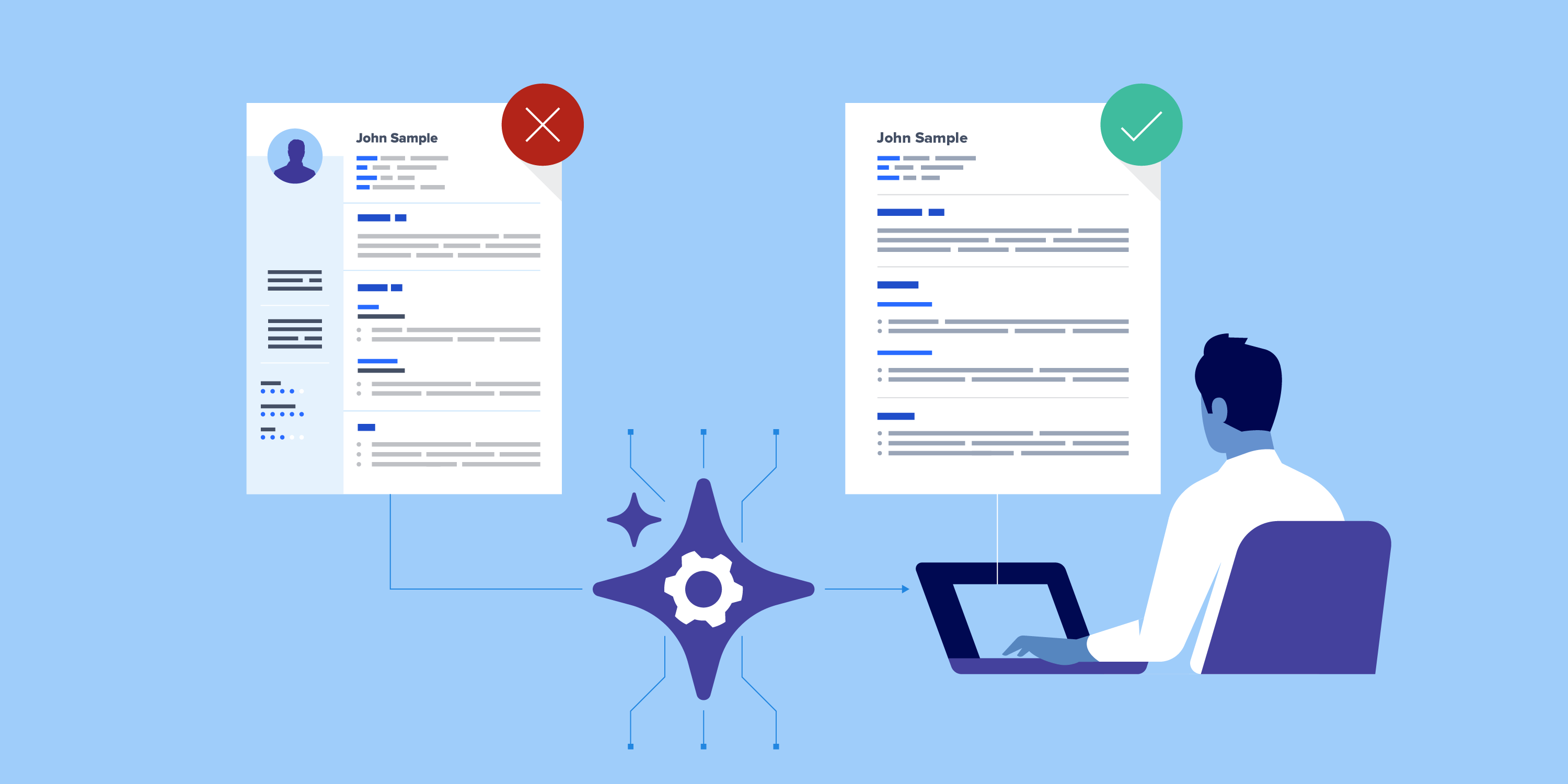
Discover the best resume builders for 2026 and how they help recruiters review resumes more efficiently.
In 2026, AI is expected to reshape resume writing, with many job seekers already relying on AI tools to draft or improve their applications. These tools determine how candidates present their experience and match their resumes to job descriptions. Given the high-volume of resumes recruiters review daily, clarity and structure matter. Resumes that are easy to read, ATS-friendly, and relevant to the role are easier to review.
This guide looks at the best resume builders of 2026 from a recruiter's perspective. It explains which tools produce clear resumes and how they affect screening quality.
Why Resume Builders Matter for Recruiters
Resume builders have a direct impact on the resumes recruiters receive because they influence how clearly candidates present their experience and skills. This matters during screening, where only a small share of applicants move forward and resumes must be both relevant and easy to read.
The best resume builders help candidates:
- Use consistent formatting and clear structure.
- Highlight key achievements early.
- Include relevant keywords for ATS.
- Avoid cluttered layouts or distracting design.
- Reduce the need for manual reformatting.
When resumes are structured this way, recruiters can review them faster and spend more time evaluating the candidate’s fit, instead of fixing formatting or searching for key details.

How Resume Builders Reveal Candidate Strengths
Resume builders help candidates present their strengths more clearly by guiding them to organize information in a way both ATS systems and recruiters can read easily. Many tools also encourage the use of relevant keywords from the job description, which helps surface important skills and experience.
Instead of long lists of responsibilities, good builders prompt candidates to write short, results-focused bullet points and clear summaries that explain impact and relevance. This gives recruiters a more accurate picture of what a candidate can do.

Key Resume Builder Trends Recruiters Should Know in 2026
Modern resume builders increasingly influence recruiter workflows. Key resume builder trends for 2026 include:
- AI-generated bullet points that offer clearer achievements, but run the risk of being generic.
- ATS-first design with templates that are built to parse correctly across multiple platforms.
- Real-time resume scoring that optimizes for job posting keywords automatically.
- Role-specific tailoring that rewrites or reorders resume content based on job descriptions.
- Integrated cover letter builders that allow for consistent branding across documents.
- Minimalist layouts with cleaner formats that match recruiter readability preferences.
These resume builder features make sure resumes are easier to read, easier to score, and help make the resume review process more efficient and seamless for recruiters.

The Best Resume Builders in 2026
Toptal Resume
Toptal Resume is Toptal’s resume builder for professional and technical roles. Candidates can either start from scratch using a guided, section-by-section builder or upload an existing resume to have it parsed and reorganized automatically. The tool focuses on clean structure, real-time previews, and ATS-friendly formatting, helping candidates present achievements, skills, and experience in a way that recruiters can scan quickly.
From a recruiter’s perspective, Toptal Resume stands out because it improves clarity and substance rather than generating generic AI text. It helps candidates write stronger, results-focused bullet points, surface role alignment earlier, and reduce vague or inflated language. The resumes produced are polished, consistent, and easy to evaluate. When candidates use the full version to download and finalize their resume, Toptal Resume produces some of the most recruiter-ready resumes among modern builders.
Zety
Zety helps candidates produce clear, well-structured resumes with professional templates that emphasize readability and key information. Its guided, section-by-section prompts and prewritten suggestions make it easier for applicants, especially beginners or career changers, to highlight relevant skills and experience in a format that recruiters can quickly scan and assess.
Zety’s structured workflow can lead to generic or formulaic resumes, and the automated suggestions often lack specific metrics or details that help differentiate candidates. Additionally, its rigid template options may limit visual creativity, and if applicants rely on the free version, the exported resumes may be in plain text, reducing formatting clarity.
Resume.io
Resume.io enables candidates to quickly produce clean, professional resumes using a user-friendly interface and ready-to-use templates. Its intuitive step-by-step workflow, AI-assisted writing suggestions, and live scoring help applicants present key skills and experience clearly, making it easier for recruiters to scan and assess resumes efficiently.
From a recruiter’s standpoint, the tool offers limited creative or stylistic flexibility, and its templates may appear generic. Additionally, free users cannot download completed resumes in usable formats, and premium features like AI tailoring and full content suggestions are behind a paywall, which may result in incomplete or minimally optimized resumes.
Kickresume
Kickresume helps candidates create professional resumes using over 40 customizable templates designed by typographers and recruiters, combining aesthetics and functionality for polished, readable results. The platform allows reordering of sections, previewing resumes during editing, and adding unique details, helping applicants present their skills and experience in a clear, organized way that recruiters can easily evaluate.
From a recruiter’s perspective, some features are locked behind a paywall, limiting access to premium templates and advanced options for candidates. Additionally, pre-written content may feel restrictive for candidates who want more personal flair, which could result in resumes that lack individual voice or customization.
Enhancv
Enhancv gives candidates the tools to create professional resumes with 20 customizable templates and flexible design tools, including adjustments for fonts, colors, margins, and layout. Built-in AI features help generate bullet points and tailored resume summaries, and ATS scoring provides insight into how well a resume aligns with a job description, making it easier for recruiters to see structured achievements and relevant experience.
From a recruiter’s standpoint, many of Enhancv’s advanced features, including detailed content suggestions, AI tailoring, and text improvements, are locked behind a paywall. Free users have limited access, and resumes may include watermarks, with full functionality available only during a 7-day trial or through paid plans, which may restrict some candidates from producing fully optimized resumes.
LiveCareer
LiveCareer supports professional-looking resume and cover letter creation with templates ranging from traditional to creative. Users benefit from a clear, well-structured interface and helpful guidance throughout the resume-building process, making it easier for applicants to present their experience clearly and for recruiters to navigate and assess their documents efficiently.
From a recruiter’s standpoint, the subscription model and automatic charges may restrict candidates’ access to the platform’s features, which could result in incomplete or partially optimized resumes. Candidates’ reliance on a paid plan may affect the consistency and polish of the documents recruiters receive.
Canva
Canva allows candidates to create visually appealing resumes using customizable templates, industry-specific designs, pre-written content, and a drag-and-drop editor. Its free version provides access to a wide range of layouts, fonts, colors, and styles, making it easy for candidates to produce structured, professional-looking resumes.
From a recruiter’s standpoint, most Canva resume templates are not ATS-friendly, and the platform relies heavily on design features such as graphics, columns, and creative layouts. While visually polished, these templates may not be compatible with automated screening systems, and candidates may need to take extra steps to ensure their resumes are readable by ATS software.
Jobscan
Jobscan helps candidates optimize resumes for ATS systems by providing clean, simple templates and data-driven keyword guidance. This focus on matching resumes to job descriptions can improve candidates’ visibility in automated screenings, helping recruiters identify applicants whose skills and experience align with the role.
From a recruiter’s standpoint, Jobscan offers a limited number of resume templates and relies primarily on algorithm-based suggestions. While the tool enhances ATS compatibility, it does not provide extensive content or formatting guidance, and some features require a premium subscription, which may limit access for certain users.
MyPerfectResume
MyPerfectResume guides candidates through building structured resumes using a variety of professional templates and a guided builder that offers detailed guidance through each section. This structured approach allows applicants to present their strengths and experience clearly, which can make it easier for recruiters to review and assess candidates.
From a recruiter’s standpoint, access to fully optimized resumes may be limited because MyPerfectResume requires a subscription for full features, and its free version offers only limited functionality.
Word
Microsoft Word provides candidates with widely used, fully customizable resume templates in formats like .doc and .docx. These templates allow job seekers to create visually structured resumes suitable for print or electronic submission, giving applicants control over layout and formatting, which can help them present information clearly to employers.
From a recruiter’s standpoint, Microsoft Word offers no built-in guidance or automated tools for resume content, keyword optimization, or formatting consistency. Candidates must manually manage spacing, alignment, and layout, and resumes created outside of Word may display formatting issues, which can lead to inconsistent presentation.
What Recruiters Want to See in a Resume in 2026
Recruiters want resumes that present information clearly and efficiently from their perspective. A strong resume is tailored to the role, uses relevant section headers, and removes outdated or unnecessary content. Formatting should be clean and consistent, with clear headings, aligned dates and locations, and enough white space to guide the reader’s eye.
Resumes should avoid complex layouts such as tables, columns, or text boxes that can confuse ATS systems or slow manual review. Recruiters also look for concise, results-focused bullet points that use strong verbs and measurable outcomes, rather than long paragraphs or task lists. Each resume should highlight the most relevant experience for the job and present contact details and abbreviations clearly and professionally.

How Recruiters Can Use or Recommend Resume Builders
Recruiters can use resume builders as a way to encourage candidates to submit clearer and more consistent resumes. Recommending preferred tools helps set expectations for structure and formatting, which makes applications easier to scan, compare, and evaluate, especially in high-volume hiring.
These tools can also support internal hiring and promotion processes by creating a more consistent baseline across applicants. When candidates use structured builders, recruiters spend less time addressing formatting issues and more time assessing skills, experience, and role fit.
Limitations Recruiters Should Be Aware Of
AI resume builders can improve clarity and structure, but they also introduce some limitations. Because many rely on templates and predictive phrasing, resumes may sound similar across candidates or feel generic, making it harder to see individuality or unique strengths. They may also struggle with complex or unconventional career paths, which can lead to missing context or oversimplified experience.
Some builders place heavy emphasis on keyword matching for ATS systems, which may produce resumes that score well but feel shallow or overly engineered in human review. Recruiters should read AI-built resumes with a focus on authenticity, specificity, and real-world substance, rather than assuming polished formatting equals stronger qualifications.
Why Resume Builders Remain Essential in 2026
As hiring speeds up and applicant pools keep growing, resume builders are useful for both candidates and recruiters. They help create resumes that are clearer, more consistent, and easier to review. Good resume builders encourage clean formatting, simple structure, and ATS-friendly layouts, so key details like work history, skills, and contact information are not lost or misread. Going into 2026, resume builders are no longer just a nice extra. They have become an essential part of efficient and fair hiring.

Amanda Menin is a SHRM-SCP-certified recruitment and organizational design expert with more than 20 years of experience. She has led talent strategy, retention, and HR transformation at organizations including MercyOne, Hearthside Food Solutions, and the State of South Dakota.