The Best Resume Templates for 2026

Amanda Menin is a SHRM-SCP-certified recruitment and organizational design expert with more than 20 years of experience. She has led talent strategy, retention, and HR transformation at organizations including MercyOne, Hearthside Food Solutions, and the State of South Dakota.
Explore the best resume templates for 2026 and ATS-friendly formats recruiters will notice.
The job market continues to evolve rapidly, shaped by AI advancements, skills shortages, and shifting work preferences. With 78 million new job opportunities projected by 2030, and urgent upskilling needed across organizations, resumes remain a critical gateway for candidates to demonstrate value.
Recruiters, facing high-volume applications and AI-driven screening, rely on well-structured documents to identify talent efficiently. Yet, traditional resumes often fall short in an era where 90% of HR leaders prioritize skills over college degrees and AI literacy tops employer scans.
For recruiters, resume templates have become more than formatting aids. They influence how quickly strengths are identified and how fairly candidates are compared. Modern best practices signal that structured templates help surface impact, guide recommendations, address common limitations, and support effective hiring in an AI-driven landscape.
Why Resume Templates Matter for Recruiters
In 2026, with AI handling high-volume recruiting and ongoing demand for roles like software developers and other roles with large applicant pools, recruiters increasingly rely on standardized templates to scan for measurable achievements and skills alignment more quickly.
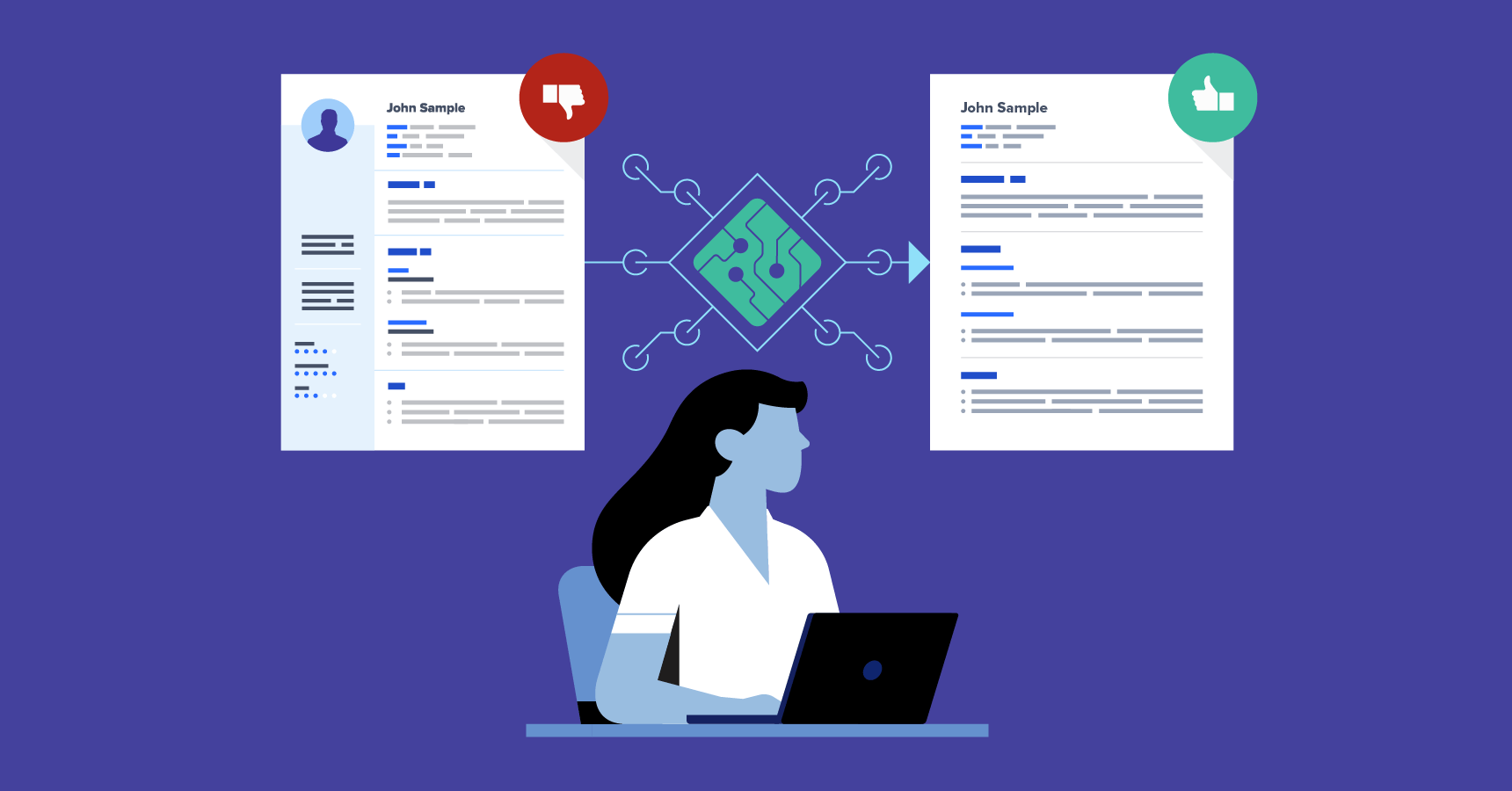
Resume templates streamline the evaluation process for recruiters inundated with applications, ensuring consistency and quick readability in a market where the vast majority of employers rely on recruiting systems to screen or prioritize candidates before a human ever reviews them. By enforcing clean structures, such as standard section headers, ATS-compatible fonts like Arial or Calibri, and keyword integration, templates reduce parsing errors and biases that are introduced by varied formats.
Templates also mitigate risks from misrepresentation or inaccurate claims, and generic AI-generated content, which can signal low differentiation or a lack of specificity. Structured templates encourage tailored, human-refined outputs using frameworks like PAR (Problem-Action-Result), which quantify impacts (e.g., “Reduced costs by 40% via new protocols”), helping recruiters assess true fit for strategic roles.
Ultimately, templates bridge talent gaps by highlighting emerging competencies, aligning with an increasing number of employers adopting skills-based hiring to expand diverse pools.

Resume Template Trends Recruiters Should Know in 2026
With employers anticipating that 39% of key skills required in the job market will change by 2030, recruiters must adapt to 2026 trends, emphasizing technological literacy and resilience as AI becomes more central to hiring and work.
Templates should evolve accordingly:
1. AI-optimized and balanced structures: AI is becoming deeply embedded in recruiting workflows. LinkedIn’s 2026 talent research shows that 93% of recruiters plan to increase their use of AI, with two-thirds expanding AI-driven prescreening to manage volume and uncover qualified candidates faster. As AI plays a larger role in resume review, templates must support job-specific keyword alignment without over-optimization, while preserving authenticity through human-edited, outcome-focused bullets. Designs that surface quantifiable results (e.g., “Improved yield from 5% to 33%”) are more resilient to both ATS parsing and AI-assisted evaluation.
2. Skills-first layouts: Prioritizing abilities over chronology, with 65% of managers hiring on skills alone, templates will feature dedicated sections for hard skills like AI or big data proficiency and soft skills like empathy, all linked to examples. Templates should also include certifications and upskilling evidence, as foundational skills outlast specialized ones.
3. Hybrid and digital adaptability: Reflecting tighter office mandates, templates will signal remote/hybrid fit via phrases like “Managed virtual teams.” ATS-friendly PDFs/Word formats with simple navigation will dominate, avoiding tables or graphics that disrupt scans.
4. Targeted and inclusive customization: Reverse-chronological templates with flexible sections (e.g., “AI and Automation Projects” for technical roles), using action verbs like “Analyzed” or “Led” for scannability support diverse hires, as highly skilled nondegree candidates may match or surpass those with degrees.
As generative AI accelerates skill change, these trends reinforce the need for resume templates that help recruiters verify abilities through concrete examples and evidence.

The Best Resume Templates in 2026
Top templates align with ATS compatibility, skills emphasis, and AI balance, as outlined in career guides. Here's a curated list, evaluated for recruiter utility:
Toptal Resume
Toptal Resume is a purpose-built resume builder designed for technical and skills-first hiring, making it particularly effective for software engineers and other tech professionals navigating ATS-heavy recruiting workflows. Its templates emphasize clean, standardized structure, ATS-compatible formatting, and clear skills evidence, while guiding candidates through either building a resume from scratch or uploading an existing one for refinement.
Unlike general resume builders that rely heavily on generic AI phrasing or design-forward layouts, Toptal Resume focuses on impact-driven content, keyword alignment, and scannability, helping recruiters quickly evaluate scope, outcomes, and technical depth. With dedicated templates, examples, and guidance tailored to technical roles, Toptal Resume provides the most reliable starting point for candidates who want their experience to be parsed accurately, reviewed efficiently, and assessed on substance rather than design.
Zety
Zety is a step-by-step resume builder designed for job seekers who need more structure. Users progress through each section in order, with explanations that clarify what should be included and automated suggestions for Work History, Skills, and Summary. These prompts can speed up drafting but are typically generic and lack specific metrics. Zety also offers multiple templates, basic design controls, and a spell-check tool, though the checker can mistakenly flag company names.
The main limitation for recruiters is formatting: Free users can only download resumes as plain TXT files, which removes all visual structure. The linear workflow can also lead candidates to submit rushed or incomplete sections, since navigating backward requires clicking through every subsequent section again. As a result, while Zety helps beginners produce structured content, many resumes may arrive with minimal detail and no usable formatting unless the applicant pays for a full download.
Resume.io
Resume.io is a user-friendly resume builder that offers 31 templates, AI-assisted writing, prewritten phrases, and a live resume score that updates as candidates add content. Features like “Improve Resume” and job-specific tailoring (premium-only) can help applicants fill gaps and align their resumes to a posting, while customizable sections and design controls generally lead to clean, structured documents.
For recruiters, there are several limitations. Resume.io provides little clarity on which templates are ATS-friendly, and more stylized designs may cause parsing issues. Heavy use of AI and stock phrasing can also result in resumes that look and sound similar, reducing differentiation among candidates. Because there is no free download option, some applicants may never submit a finished resume, and those who do may rely heavily on generic content.
Kickresume
Kickresume offers more than 40 templates, clearly labeled as free, premium, or ATS-friendly, and allows candidates to start by importing a resume, pulling data from LinkedIn, or generating a first draft with AI. AI tools are available in every section, including rewriting, section-specific prompts, resume tailoring (beta), and basic ATS analysis. Even free-tier users can customize design elements and download unlimited resumes as long as they stick to free features.
Content quality can vary for recruiters. AI-generated text may require refinement; some features that strengthen resumes (such as recruiter-style feedback) are paywalled, and candidates who rely heavily on generic AI suggestions may produce less distinctive applications. Because Kickresume offers broad stylistic customization without industry-specific guidance, template choices may not always match the expectations of certain roles.
Enhancv
Enhancv is an AI-assisted resume builder that guides candidates through a structured setup and encourages standard sections, action-oriented bullet points, and keyword alignment. Its AI Assistant and AI-tailored summaries help candidates generate polished experience statements, while the ATS Check feature provides a match score against a job description. The platform offers broad visual customization across 20 templates, which often results in resumes that look clean and modern and are easy for recruiters to scan when simple designs are used.
However, resume quality varies significantly. The promised “first draft” is empty, so outcomes depend entirely on how much content the candidate adds. Many AI features and content insights are locked behind a paywall, and free resumes include EnhanCV branding and lose edit access after seven days, which can lead to rushed or incomplete submissions. Extensive design flexibility can also encourage formatting choices that may reduce ATS compatibility. As a result, recruiters frequently see EnhanCV resumes that appear visually refined but differ widely in depth, specificity, and overall substance.
LiveCareer
LiveCareer is an AI-supported CV and resume builder known for its user-friendly experience, step-by-step guidance, and modern, customizable templates. The structured workflow can help applicants produce clear, professional-looking resumes quickly, particularly for those who benefit from guided drafting.
However, reviewers also cite concerns with the subscription model, including unexpected renewals and difficulty canceling, as well as occasional website or payment issues. These factors can pressure candidates to move quickly, resulting in submissions that look polished but may lack careful refinement or depth.
Canva
Canva is a general-purpose design platform that offers highly customizable resume templates, making it easy for candidates to create visually polished, well-organized documents. Canva resumes look modern and professional, with clear sections and consistent formatting, especially compared to unstructured or text-heavy resumes.
However, Canva is not ATS-friendly. Most resume templates rely on design elements such as columns, graphics, icons, and complex layouts that are not easily read by applicant tracking systems, increasing the risk of parsing errors or missing information. Because the platform prioritizes design flexibility over ATS optimization, recruiters may receive resumes that stand out visually but perform poorly in ATS screening and vary in clarity and substantive detail.
Jobscan
Jobscan is a resume keyword optimization tool designed to help candidates improve ATS compatibility by comparing their resumes directly against job descriptions. It analyzes keywords, formatting, and structure to generate an ATS match score and highlight gaps in required skills or terminology. As a result, resumes optimized with Jobscan are typically clean, structured, and closely aligned to role requirements, which can improve ATS performance and recruiter visibility.
However, Jobscan’s value is primarily algorithmic. Its data-driven scoring focuses on keyword alignment and formatting rather than evaluating experience depth, context, or performance. While the tool emphasizes natural readability alongside optimization, resumes produced through Jobscan often look similar and highly standardized. For recruiters, this means applications may pass ATS filters more easily, but still require careful human review to assess true capability and fit beyond the match score.
Microsoft Word
Microsoft Word remains one of the most widely used formats for resumes and is commonly recommended because of its broad compatibility and professional presentation. Word-based resumes (.doc or .docx) follow traditional, formatted layouts that print cleanly and are easy for employers to open and review across different settings, including email submissions, interviews, and career fairs.
However, resumes created outside of Word but saved as Word files may not always render consistently, with spacing or layout shifts depending on the software used. While Word resumes are reliable and familiar to employers, access to Microsoft Word is not universal, and alternative tools now offer similar functionality. Overall, Word continues to be a dependable, standard option, valued more for consistency and usability than for flexibility or visual distinction.
MyPerfectResume
MyPerfectResume is an online resume builder widely recognized for its structured, guided approach, which helps candidates create organized resumes with clearly defined sections for work experience, education, and skills. The platform’s professional templates ensure consistent formatting and readability, and the integrated cover letter builder allows candidates to provide additional context about their experience. Resumes generated with MyPerfectResume are typically polished and easy for recruiters to scan quickly.
However, the platform has some limitations. Its emphasis on structure and template-driven design can result in resumes that feel generic or formulaic, potentially obscuring unique accomplishments or complex career paths. Advanced features, including certain templates and formatting options, require a paid subscription, so candidates using only the free version may submit partially formatted or incomplete resumes. These factors can limit a recruiter’s ability to fully assess a candidate’s qualifications.
What Recruiters Want to See in a Resume in 2026
According to recent research, recruiters seek AI literacy first, followed by soft skills like collaboration and adaptability, quantified via metrics (e.g., “Led cross-functional team to 40% efficiency gain”). Expect emphasis on technological skills and environmental stewardship. Action-oriented language with no unexplained gaps in experience rounds out priorities for resilient talent.
How Resume Templates Reveal Candidate Strengths

Templates illuminate strengths by structuring PAR bullets to transform duties into stories (e.g., “Analyzed data to resolve X, yielding Y”), spotlighting soft skills like empathy in team contexts. Skills sections with examples (e.g., “Curiosity: Developed AI tool via self-directed learning”) and qualifications summaries provide at-a-glance insights, aiding AI assessments of creativity and fit.
The difference between a task-based resume and an impact-driven one is often measurable.
How Recruiters Can Use or Recommend Resume Templates
Recruiters can recommend resume templates in early-career pipelines to support reskilling, prioritizing ATS-friendly formats such as Word. Candidates can use AI tools to align keywords, with human editing required to preserve accuracy and intent. Internally, standardized templates or evaluation frameworks can help recruiters compare applications consistently and concentrate effort on complex assessments.
Limitations Recruiters Should Watch For
Recruiters should be alert to unverified or overstated claims, particularly as generative AI makes it easier to produce polished but inaccurate content, and use certifications or work samples where appropriate. Complex designs may fail ATS screening, and excessive customization can obscure career histories. Authenticity should always be verified during interviews.
The Continuing Relevance of Resume Templates
Despite the rise of AI, templates endure as human-readable bridges to skills proof, countering biases in a market valuing adaptability over credentials. With soft skills as career “glue” amid disruptions, they facilitate targeted storytelling, remaining critical for 2026’s hybrid, tech-infused hiring.

Amanda Menin is a SHRM-SCP-certified recruitment and organizational design expert with more than 20 years of experience. She has led talent strategy, retention, and HR transformation at organizations including MercyOne, Hearthside Food Solutions, and the State of South Dakota.