The Best Cover Letter Templates for 2026

Amanda Menin is a SHRM-SCP-certified recruitment and organizational design expert with more than 20 years of experience. She has led talent strategy, retention, and HR transformation at organizations including MercyOne, Hearthside Food Solutions, and the State of South Dakota.
Discover the best cover letter templates, examples, and AI cover letter builders in 2026, and why recruiters prefer them.
In 2026, recruiters are operating under tighter timelines, larger requisition loads, and rapidly evolving role definitions. Resumes summarize what a candidate has done; cover letters reveal how a candidate thinks, along with their motivation, reasoning, and role alignment. The right cover letter templates turn those signals into something scannable and comparable, reducing friction for hiring teams while coaching candidates toward clarity and relevance.
Why Cover Letter Templates Matter for Recruiters
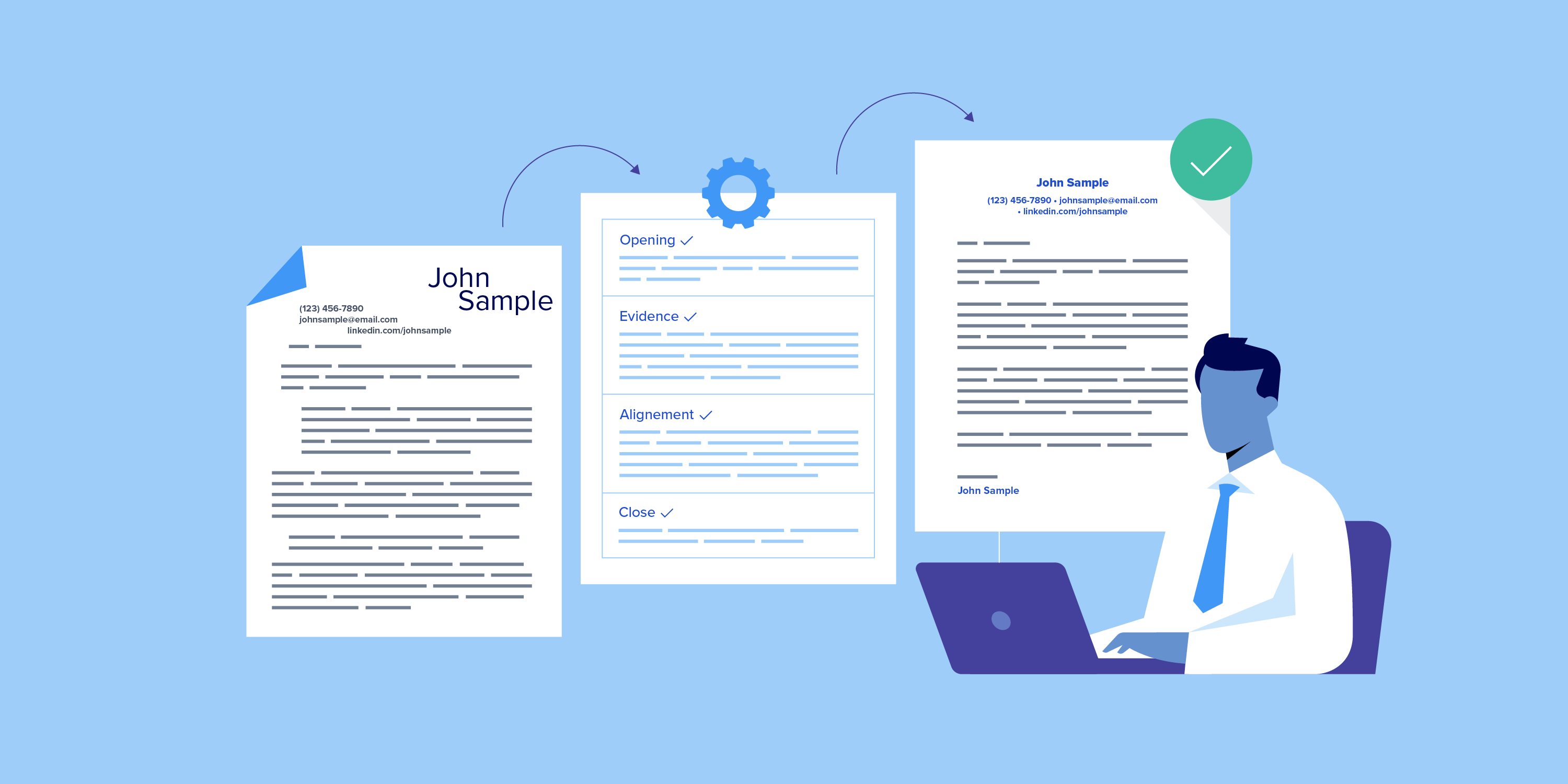
A well-chosen cover letter template directs candidates to lead with intent, highlight specific achievements or outcomes, and close with a specific ask, freeing recruiters from deciphering dense paragraphs or inconsistent layouts.
When candidates use professional cover letter templates, recruiters can focus less on deciphering layout and more on evaluating role fit, communication quality, and contextual clarity (e.g., career pivots or location moves). According to SHRM, cover letters also remain a critical tool for showcasing motivation and communication skills, even as hiring timelines tighten.
Recommending structured cover letter templates helps standardize presentation across applicants. Recruiters receive more comparable submissions, recognize patterns faster, and are less likely to overlook qualified candidates due to unclear or inconsistent formatting. When candidates reference current cover letter examples, they also align with modern expectations and ATS-safe design choices you already prefer.

Key Trends in Cover Letter Templates for 2026
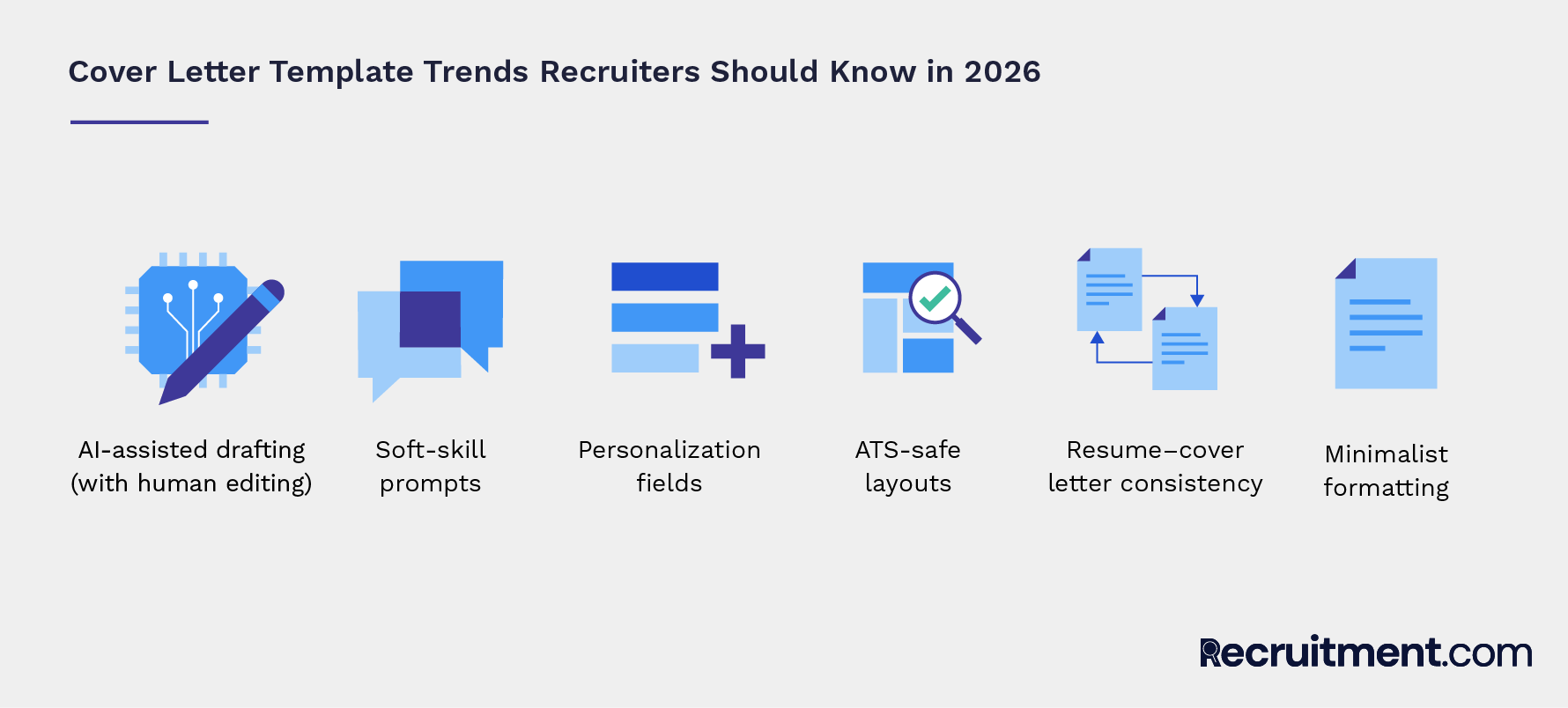
AI-assisted drafting is ubiquitous. Tools marketed as an AI cover letter builder help candidates draft faster, but unedited outputs can sound generic. Recruiters can coach applicants to use AI for first drafts, then personalize, contextualize, and tighten language.
Soft skills matter more. Single-column layouts and prompt-driven sections encourage short narratives about collaboration and adaptability. These human signals complement hard skills and help you gauge team fit. Harvard Business Review emphasizes that soft skills like adaptability and collaboration are increasingly prioritized by employers, making template prompts for these narratives essential.
Personalization prompts win. Templates that ask for the company name, role, and mission alignment make genuine interest easier to identify. Candidates who tailor their applications to a company’s culture and role requirements tend to stand out more in crowded applicant pools, reinforcing the value of templates that encourage role-specific details instead of generic text.
ATS-safe formatting prevails. Clean typography, conventional structure, and minimal styling reduce parsing risks. That’s why modern cover letter templates emphasize readability over flair.
Consistency with the resume lowers cognitive load. When design basics match, your review moves faster, and comparisons feel fairer.
The Best Cover Letter Templates and Builders in 2026
Not all cover letter templates and builders serve recruiters equally. The tools below tend to produce clearer, more structured letters that help recruiters evaluate role fit, communication, and intent without unnecessary formatting noise.
Toptal Resume
Toptal Resume is designed to produce cover letters that are easy for recruiters to evaluate, not just impressive to read. Its templates emphasize clean, ATS-safe structure, with clear openings, outcome-driven body sections, and direct calls to action that mirror how recruiters scan letters in practice. For recruiters screening a high number of applications, Toptal Resume cover letters tend to be more consistent, easier to compare, and faster to assess, especially for technical and professional roles where clarity and relevance matter more than tone alone.
Zety
Zety’s cover letter templates prioritize clean structure: a crisp header, a purposeful opening, and achievement-driven paragraphs in the body of the text. The prompts encourage candidates to connect outcomes to the role at hand, reducing boilerplate. When candidates rely too heavily on default phrasing, letters can sound similar, but personalized submissions are typically clear and easy to compare.
Resume.io
Resume.io offers professional cover letter templates that align with resume styles, reducing cognitive load for screeners. The builder nudges applicants to outline intent, relevant accomplishments, and write a concise close, which is exactly what recruiters scan for. Letters created with Resume.io tend to be easy to review, though quality depends on how much candidates tailor content beyond suggested phrases.
Kickresume
Kickresume’s designs suit creative or hybrid roles where presentation and voice matter alongside credentials. Its modern cover letter templates invite brief storytelling, making soft skills more visible without sacrificing structure. Recruiters often find Kickresume letters visually strong and readable, provided candidates avoid over-designing and keep content focused on impact.
Enhancv
Enhancv prompts candidates to clearly explain their impact through short, specific examples. The interface supports role understanding, not just enthusiasm, which helps recruiters separate thoughtful applicants from generic ones. When used well, Enhancv letters provide clearer insight into how candidates think, not just what they’ve done.
LiveCareer
LiveCareer provides cover letter templates with industry-specific guidance, which helps applicants switch sectors or formalize informal experience. Recruiters benefit because prompts anchor claims to recognizable responsibilities and outcomes. Letters produced with LiveCareer are usually structured and readable, though depth varies based on how much candidates refine the draft.
Canva
Canva offers visually polished designs that can be risky if candidates prioritize aesthetics over clarity. Recruiters often see strong visual hierarchy but inconsistent ATS compatibility. When candidates use less complicated layouts, Canva letters can be clean and readable; when they over-design, screening slows down.
If candidates cannot access paid platforms, simple Google Docs or Word templates with minimal styling, strong headings, and proof-driven paragraphs often outperform visually complex designs, especially when candidates reference cover letter examples to calibrate tone and length.
What Recruiters Want to See in a Cover Letter in 2026
Recruiters value brevity, intent, and relevance. Great letters open with a one-sentence “reason to talk,” then connect a short achievement to the role’s outcomes, and close with a specific next step. Beyond content, look for role awareness and evidence of learning or ownership.
When candidates use professional cover letter templates, these signals surface faster: You see what they prioritize, how they synthesize context, and whether they can communicate clearly under constraints. Reinforce that clarity beats cleverness; cover letter templates should help candidates craft concise, human messages you can evaluate in seconds.
How Cover Letter Templates Reveal Candidate Strengths
Templates do more than tidy layouts; they reveal thinking. A prompt like “why this role” shows whether a candidate understands scope. A section for “relevant achievements” exposes whether they connect outcomes (not just tasks) to your team’s needs.
As recruiters, you’re looking for pattern recognition: alignment, communication, and ownership. Modern cover letter templates guide candidates to present those signals consistently. When you see them twice, once in the resume’s bullet points and again in the letter’s short narratives, you gain confidence that the candidate can deliver under realistic constraints.

How Recruiters Can Use or Recommend Cover Letter Templates
Make cover letter templates part of how you guide candidates through the application process. Share a shortlist (e.g., Toptal Resume, Zety, Resume.io, Enhancv) in your confirmation emails or job pages with one sentence of guidance: “Open with intent; cite one quantified achievement; ask for the next step.” Add links to the cover letter examples and a free cover letter template for accessibility.
For applicants who need drafting support, clarify that AI-generated cover letters are acceptable as a starting point, but must be personalized. Encourage them to replace vague claims with role-specific outcomes and to mirror the vocabulary of your job description. Over time, your candidate pool will submit clearer letters, and your screening time per applicant will drop.
What Recruiters Should Watch For in Cover Letter Templates
Templates are tools, not tailwinds for every candidate. You’ll see over‑templated letters that sound alike; advise applicants to add role-specific details and short, contextual notes. You’ll also see AI-generated lines that feel generic; request two sentences of human-written specificity about the company, product, or team.
Finally, beware of design excess. Even modern cover letter templates can go too far; remind candidates that your ATS prefers clean typography, conventional headings, and compact paragraphs. When in doubt, a free cover letter template with strong prose beats a stylized layout with weak content.
The Lasting Value of Cover Letter Templates
At scale, structured cover letters help recruiters compare commonalities between the role and the candidate’s experience. They allow candidates to signal the qualities jobs actually hire for: communication, alignment, and impact. The best cover letter templates reduce friction by guiding applicants to say the right things, in the correct order, with evidence.
Whether candidates start with a free cover letter template, adopt professional templates, or draft a cover letter in an AI cover letter builder before human editing, it’s the recruiter’s role to guide them toward clarity and authenticity. Tie template recommendations to cover letter examples, keep guidance repeatable and straightforward, and you’ll raise the baseline quality of every submission, without slowing down a single requisition.

Amanda Menin is a SHRM-SCP-certified recruitment and organizational design expert with more than 20 years of experience. She has led talent strategy, retention, and HR transformation at organizations including MercyOne, Hearthside Food Solutions, and the State of South Dakota.